The Notice Board is now part of the Social Art Library. Led by Axis this is a great resourch of projects and artists The Notice Board’s entry can be found HERE:
The Notice Board is now part of the Social Art Library. Led by Axis this is a great resourch of projects and artists The Notice Board’s entry can be found HERE:
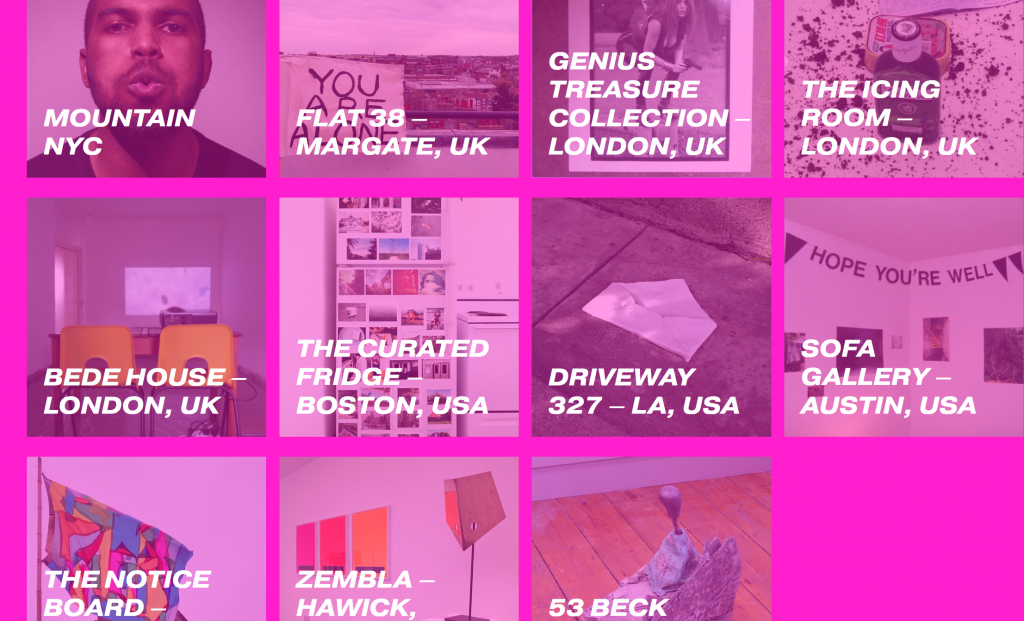
The Notice Board is one of the featured Home Gallery spaces that Rhiannon Edwards has celebrated her on this new website. She writes: Home galleries are spaces in the homes of art lovers dedicated to the work of artists. This is an open-ended project that attempts to reach forward and backwards in time and right around the planet. Right now the galleries shown are overwhelmingly from the western world, however there are more locations to come and the intention is to show the global picture. To bring together the work of people all over the world who keep some of the most exciting ideas in art thriving – often with little or no external support. Im glad my work is part of this great growing collection
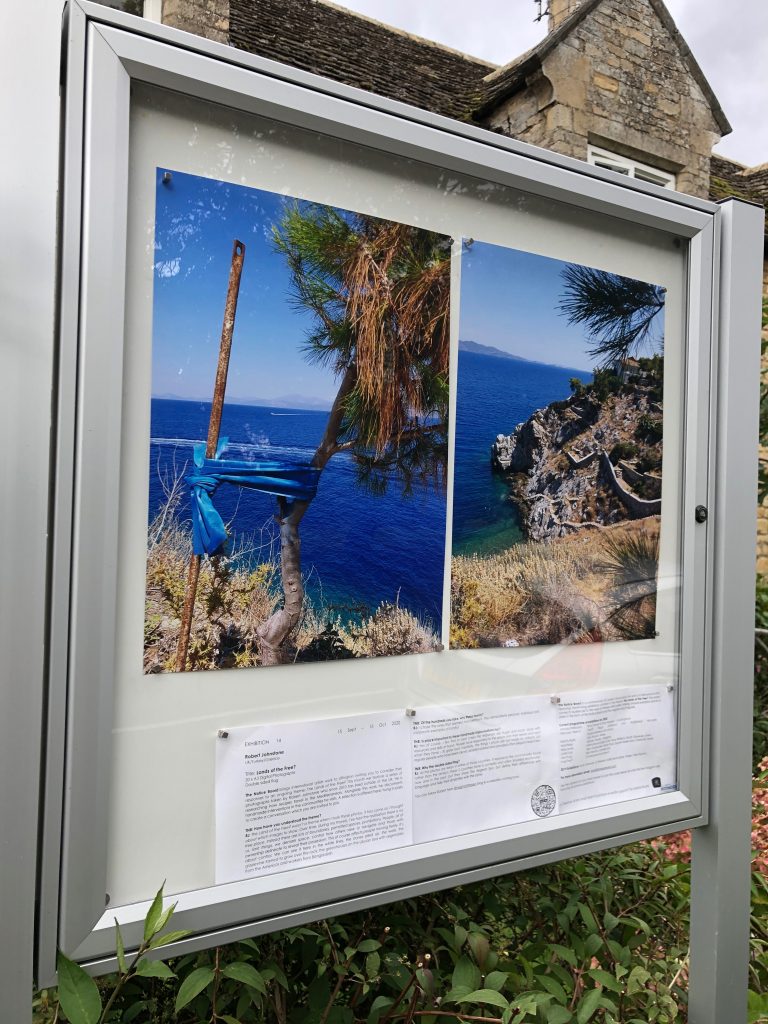
Robert Johnstone.
Title: Lands of the Free?
The Notice Board brings international artists work to Uffington inviting you to consider their responses to an ongoing theme: The Lands of the Free? This month we feature a series of photographs taken by Robert Johnstone who since 2010 has lived outside of the UK. He is researching how recipes travel in the Mediterranean. Alongside this work he documents handmade interventions in the communities he visits. A selection is offered here; hung in pairs to create a conversation which you are invited to join. @noticeboardunited
TNB: How have you understood the theme?
RJ: The Land of the Free? wasn’t a theme when I took these photos, it has come as I thought about which images to show. Over time, during my travels, I’ve had the realisation there is no free place. Instead there are lots of boundaries, permitted spaces, prohibitions. People, all of us, limit things, we demark space, control how others view or navigate and those with ownership delineate to reveal their possession. This of course affects people moving freely. It’s about control. We can see it here in the white lines, the stones piled up, the walls, the grapevine trained to grow over the rock, the greenhouses on the Libyian Sea with vegetables from the Americas and workers from Bangladesh.
TNB: Is place important to these handmade improvisations too?
RJ: Yes of course. I like that in most cases the responses are frugal and local; done with resources and skills at hand. People have responded to the place and their needs and used what they have – its grass roots creativity. The things I photo are not made by artisans, just regular people who have been clever, problem solved and provided often elegant responses.
TNB: Why the double sided flag?
RJ: All the photos are taken in either of those countries. It represents the commonality found rather than the division, these 2 countries have a complex and often troubled relationship, now and in the past, but they share The Aegean Sea, but define their differences with language and hide their similarities with the same.
You can follow Robert here @insightofthesea blog & his website is coming soon.
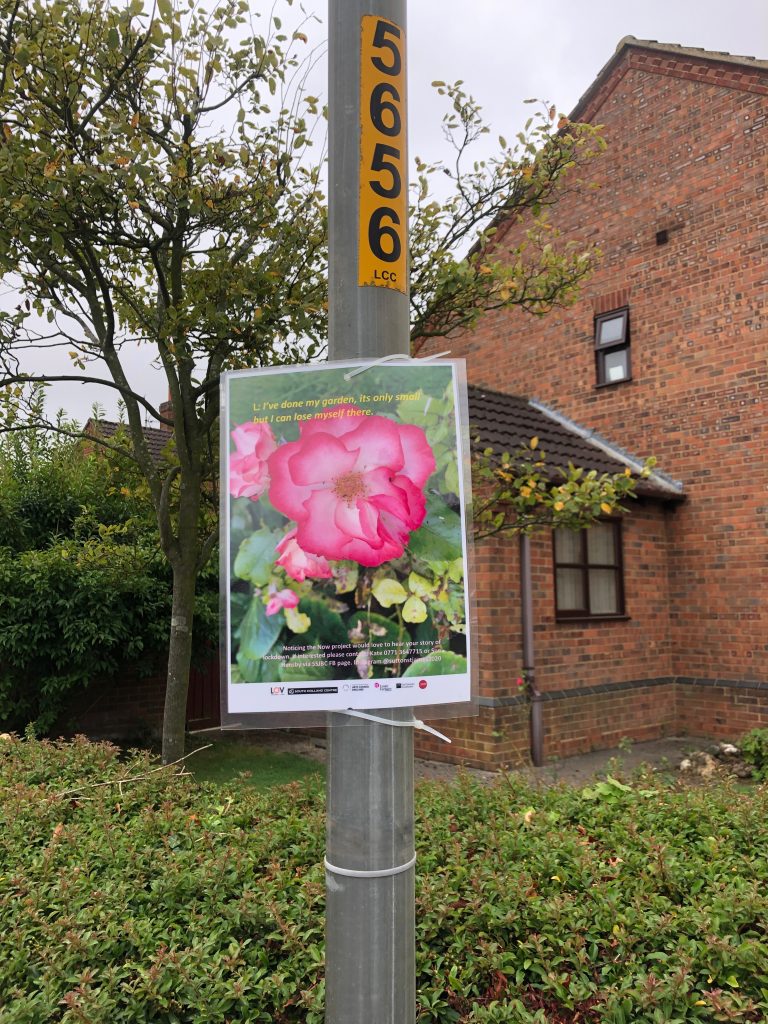
My commission for the South Holland Centre and LOV1 Venues has seen me, amongst other things, collecting photos as I walk and talk in the village. All things I snap seem pertinent to lockdown times and how this community are coping. An Instagram archive is HERE .
I’ve also been collecting, in the form of notes, all the learning, noticing and making people have been doing since March. This contemporary collecting, via listening, has proved to be joyful, fascinating, and moving. Many talk of the resourcefulness of the community and how, with its small businesses, this isolated village is ‘simply enough’. People have also spoken of the kind acts and support that’s been forthcoming from across the community. All of which has reinforced to residents, and me, how care-full art-full living is alive and well in places many consider to be lacking.

During gilding, with Eskdale Restoration at The Old Vic, I declared it ‘an evil mistress’. Each part of the process is delicate, fine, work that requires skill, a steady hand and nerve. The priming, sizing are tempramental yet addictive – all done to bask in golden awe. Working on carved letters up a scaffold, on a noisy London Covid struck corner, with wind and sun made the job even more difficult. Evaporation, drying times, distruptions and wobble keep you super alert and physicaly fraught. The silent closeness to another person, where their breathing marks the gap between brushstrokes and their movements guiding your own, is good and revealing.
Our efforts were made more potent by the fantastic carving – the shape and skill of each letter, the words themselves – a beautfiul text and the woman they celebrated: Emma Cons. The pride and priveledge felt by being up close and personal with this made the fact we couldnt finish due to external forces even more difficult. So we’ve had to leave and the elusive awe is still unwon. In compensation Sue and I decided to add a Mahl stick and phrase from the Emma Cons plaque on nearby Leake St tunnels. How great to prime, size and gild this tool onto a wall that permits and celebrates skill, creativity and signwiriting ways. Like us, the Graf guys are drawn to words, shaped letters and gorgeous colours. So it seemed right to bring Emma and oursleves into this broad gang: The Lovers of Beauty.

Of her work The Song of Increase. Nisha said: The title for this work has been inspired by Jacqueline Freeman a biodynamic farmer and beekeeper. Jacqueline describes in her book how “The Song of Increase signals the most delightful time in the life of the hive – a times when everything in the hive is blossoming…the bees revel in fulfilling their directive to bear increase into the world.”
Unfortunately, despite the bees evolving on earth for over 12 million years they are now dying at an alarming rate. Bees are recognised as the most important livg beings on the planet, they pollinate more than 90% of our crops, most of what we consume is thanks to the pollinators; from apples, to coffee to almonds. They are vital for a healthy ecosystem and a healthy economy and yet we humans are having a detrimental effect on the survival of the bees and ultimately our own survival. The decline is being caused by the use of pesticides, loss of habitat, effects of climate change, mobile phone masts, pests; the varroa mites etc.
The flag flown alongside this work has been made by Kate Genever and features an image of a Queen Bee.

I’m happy the activity pack developed with help of Liz Dorton, Orts sewing group and Chiltern Primary School is now out with young people across HU3 Hull. A hundred, 96 page, books were gifted in a handmade bag that also contained lots of drawing and making materials. It’s aim is to offer an artful respite for vulnerable residents, during these Covid/ home-schooling times. Taking Pareidolia [eg:seeing shapes in clouds] as its theme, the pack uses very little language or instruction – instead its offers space and freedom for imagining improvising and exploration . Downloadable versions are available on the Chiltern Primary School website.
I received an ACE Covid Support Award based on an application that talked of taking stock and ready-ing myself for what’s next. I have entered into coaching with Bryony Rowntree an artful practioner based in Leeds. Her work has been fascinating and generous. Her visioning and embodied approaches reveal new ways of thinking and working and offer insights into meeting people half way. Our sessions provide a held professional space which, given the heavy emotional work I do with people and groups, now seems essential.
It also draws attention to the often questionable duty of care for freelancers as we work increasingly in the void where services are lacking – mental health to name the obvious one. Perhaps as we move forward into times where ‘health and wellbeing support’ will become even more urgent we should consider and ask how budgets can be arranged to support artist to keep ourselves well too

Consequences on zoom, face to face or as postal worksheets has enabled discussion on topics ranging from the origin of our names, the identification of magnetic north using body hair, isolation, personal trauma, roles of women and of course Covid and BLM protests. Personal, political, universal debates… We have laughed, cried, longed for and sworn. In many ways we have grown in confidence, been vulnerable, made friends, tried new things. Drawing and its outcomes have accompanied us along the way, helping our conversations, often with strangers, flow. That doesn’t mean the drawing is an add on, rather it is a serious action, or line, helping us to walk with the knowledge that we might not know where we are going.
F Matarasso [community artist/writer] would describe his role, when working alongside people, as that of a seasoned Mountain Guide – holding peoples anxieties as they climb new routes. I like this description, it recognises the risk – a mountain is not a predictable place, as well as the experience of knowing what to do with twisted ankles, fog and beautiful views. I often talk about how my work is in the process of making with others, enabling vulnerability and giving people permission. Both our approaches acknowledge and value the ‘emergent space’ and an ability to sit with not knowing.
However and importantly Consequences is as much Sarah and Ruth’s work, often known as the project managers, here they are definitely collaborators. We worked things out together, responding to what comes up and what the women involved need or want. I wonder if our collective creative thinking is also like the act of drawing – a feedback loop of idea forming and response? This approach allows for ownership beyond us 3, enabling anyone involved to see their part in the collective whole.
My practice is concerned with improvisation and care and the work to date has involved these themes at multiple levels. Improvisation can been seen in the approaches outlined above, in the drawings themselves and of course in our response as Covid hit. Care is how we’ve been with each other and with those who have participated. Its implicit in the packs and workshops offered or sent out. It’s there in the Zoom sessions as distanced people support and comfort and encourage and significantly present in the drawn and discussed responses to questions or prompts carefully submitted.
As we move in to the final phase of this project, where we will showcase online, publicly site posters and develop packs to extend the work, my ambition is to celebrate but also recognise there is much work to be done – in connecting, learning and seeing one another more across age, religion, background and culture. Consequences has enabled women in Peterborough and across the country to coalesce in and around distinct spaces, diverse questions and alternative drawing prompts. But I hope in the future its outcomes create further connection, understanding and empathy.

Sorcha Noble. Alice Pool. Charlotte Hayes
Title: The Lands of the Free?
The Notice Board shines a light on current work and international artists. It aims to offer you, the audience, a provocation with its ongoing The Lands of the Free? theme. This show does that with three graduating Fine Art students from across the UK. During Covid their colleges have cancelled their final shows. A significant moment for any art student, it’s a culmination of 3+ years effort to unlearn, relearn, refine and ready yourself for the next stage. This exhibition does not pretend to replace this important point of focus, instead it offers an opportunity for these early career artists to look forward during a unique and strange time. In response to the theme they proposed:
Since Covid 19 our normal everyday lives are being put on hold but somethings have become more noticeable. We hear less cars go past our houses, less traffic, shops, and people that made up noise pollution. The birds tweets become louder to us because they are no longer being drowned out, they’re sound has a new presence in the background of our current lockdown lives. Birds, a lot of the time represent or can be a symbol for being ‘free’ or ‘freedom’. But are they really free in the urban life that humans create (pre-lockdown)? Have birds acclimatised, speaking louder because of noise pollution?
This collaborative response of flag, drawings and film asks us to reflect on our actions to deter birds and their response. The Notice Board also suggests Alice, Charlotte and Sorcha want us to consider not just the assumed freedom of wild creatures but ours too. An imagined thing maybe as we respond to current government restrictions which may or may not alter our behaviours well into the future